
Floyd County Court Record Requests
Where you go depends on the tribunal. Superior Court pleadings, judgments, docket sheets, and certified copies sit with Mary Hardin Thornton, Clerk of Floyd Superior Court. Start there for any of those. The public Floyd WebCaseManagement index can pin down the case number first. Counter, mail, and phone questions all work. Georgia's E-Access directory also routes Floyd Superior records through a provider account. It is not one free, unified state database.
Put the essentials in writing. List the court and division, the case number if known, the document type, an approximate filing date, your certification choice, delivery preference, and contact details. The clerk's forms index lists no general copy-request form. Keep protected identifiers out of ordinary mail or email. Use them only if the clerk directs a lawful, secure verification step.
- Identify the court and use the public docket index to confirm the case number when possible.
- Choose online e-certification, an in-person visit, mail, or a call to the proper clerk.
- Describe the exact docket sheet, pleading, order, judgment, or transcript filing needed.
- Ask for a current estimate and state whether the copy must be plain or certified.
- Verify the finished record with the clerk when the online index lacks an image.
Floyd Dockets and Filed Documents
A Floyd County docket is an index, a history of events. It can show a filing, a hearing, a clerk action, or an order by date. Behind each entry sits the filed paper itself: the pleading, motion, service return, signed order, judgment, or exhibit. A certified copy adds the clerk's authentication on top. Different products, different costs.
Read the case header first. Then tell scheduled settings apart from completed acts. A calendar entry does not prove a hearing happened. An order entry never replaces the signed order's exact terms. When wording matters, request the filed document; the Floyd County docket search can locate the case before you make the record request.
Kinds of Court Records
Each Floyd County court keeps the files its jurisdiction creates. Superior Court holds criminal and civil dockets, domestic suits, court documents, and related records. Probate is different. It covers estates, wills, guardianships, marriages, and the traffic matters assigned to it. Magistrate handles lower-value civil claims. That court also handles warrant, bond, and preliminary-hearing functions. Rome and Cave Spring keep their own municipal matters.
- Docket sheets and chronological case-event histories
- Complaints, petitions, answers, motions, and service returns
- Signed orders, judgments, decrees, and dispositions
- Probate estate, will, guardianship, marriage, and traffic records
- Transcript filings and appeal-record materials held by the clerk
Juvenile records are not open to a general public search. A portal result that comes up empty may mean the wrong category, an access limit, or an item simply not placed online.
Floyd Record Custodians by Court
No single clerk holds every Floyd County court and government record. The Superior Clerk serves as the main custodian for the general-jurisdiction trial court. Other courts keep their own. Probate, Magistrate, Juvenile, and each municipal court maintain separate files. Lauren Chumbler, the county administrative Clerk, runs NextRequest for county government records. It is not for Superior pleadings or judgments.
Floyd Superior Court Clerk
3 Government Plaza, Suite 101
Rome, GA 30161
Mail: PO Box 1110, Rome, GA 30162
706-291-5190
Magistrate requests go to Suite 227 at Government Plaza, and staff can confirm details at 706-291-5250. Probate requests use the Probate Court office at Government Plaza; the main number there is 706-291-5136. If the portal shows a State Court category and the custodian is unclear, staff can point you to the right unit.
Court Records: What They Contain
What a file contains depends on the case and any access order. Floyd's public interface lets you search by case number or party information, then expand a result into a docket. Not every underlying image is public or free. For complete wording, the clerk's file remains the source.
| Case number | The court-assigned identifier used in the docket header and request. |
|---|---|
| Parties and category | Names and the court or case category, subject to redaction. |
| Docket entries | Dated filings, settings, orders, clerk actions, and disposition events. |
| Filed papers | Pleadings, motions, answers, summonses, and service returns. |
| Orders and judgments | The filed text of the court's directives and determinations. |
| Certification | A clerk authentication attached to an eligible paper or secured electronic copy. |
A name match alone proves nothing. Check the court, the case number, and the case header before relying on the file.
Floyd Electronic Certified Copies
Eligible certified Court and Real Estate Records have another route. Floyd's Superior Clerk points requesters to the Georgia Clerks' Authority e-certification service. You create an account and submit the request. The clerk then processes it. What comes back is a secured PDF, delivered through the online workflow or by email. E-certification is a copy channel, not the public docket search itself.
The GSCCCA e-certification portal shows that a qualifying Floyd County record can be obtained online. No paper trip to the courthouse is needed.
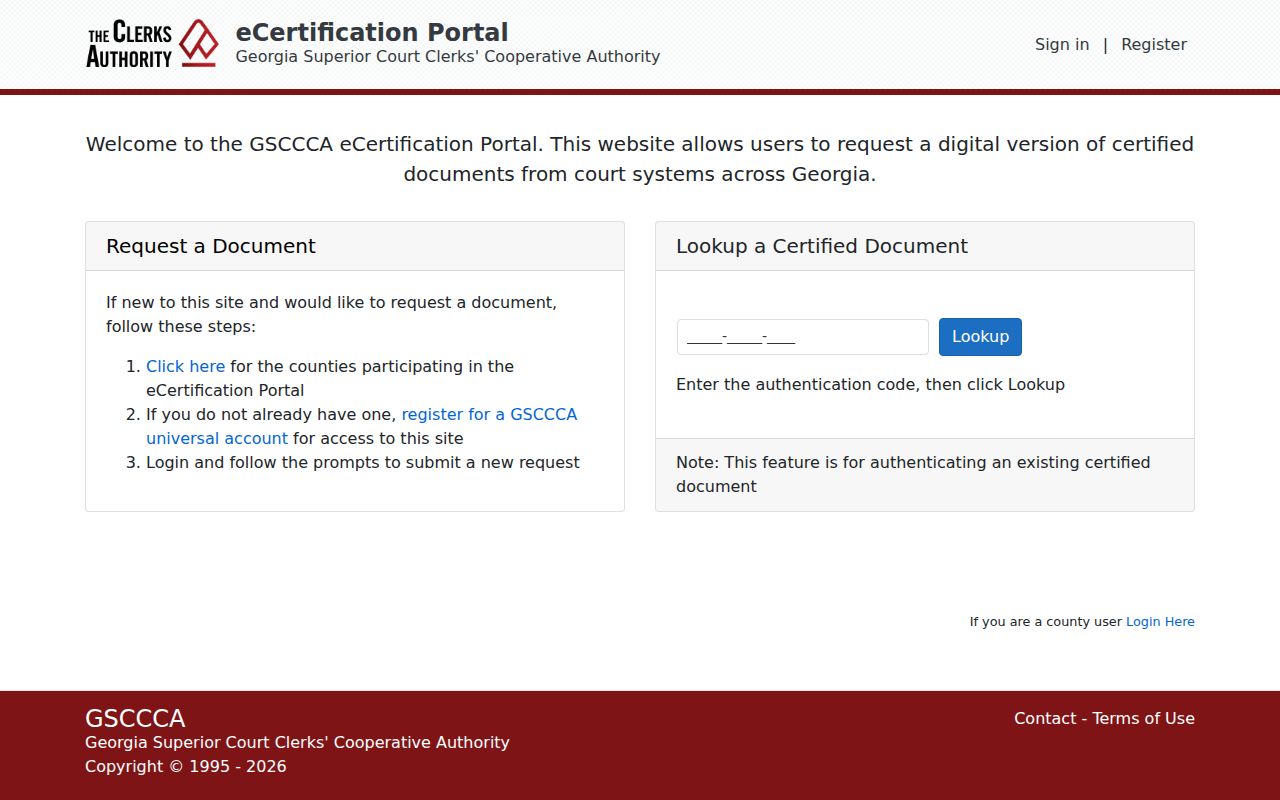
The Floyd clerk still reviews and processes each request. Confirm current timing, cost, and document eligibility before relying on any delivery estimate.
Copy Fees and Certification
The Superior Clerk's official fee schedule carries an effective date of May 12, 2011 and warns that amounts may change. Treat it as a reference, not a promise of today's total. The current clerk site recommends calling for transaction-specific fees. Filing charges stay separate from record-copy charges.
| Listed item | Observed amount | Caution |
|---|---|---|
| Uncertified copy without help | $0.50 per page | Confirm current rate. |
| Uncertified copy with help | $1.00 per page | Ask how help is assessed. |
| Certified or exemplified first page | $2.50 | Later pages may add cost. |
| Oversized copy | $2.00 | Format can affect total. |
| Fax or electronic first page | $2.50 | Later pages listed at $1.00. |
| Transcript copy | $1.00 per page | Other charges may apply. |
The Floyd Superior Clerk fee schedule is the source for these displayed amounts.
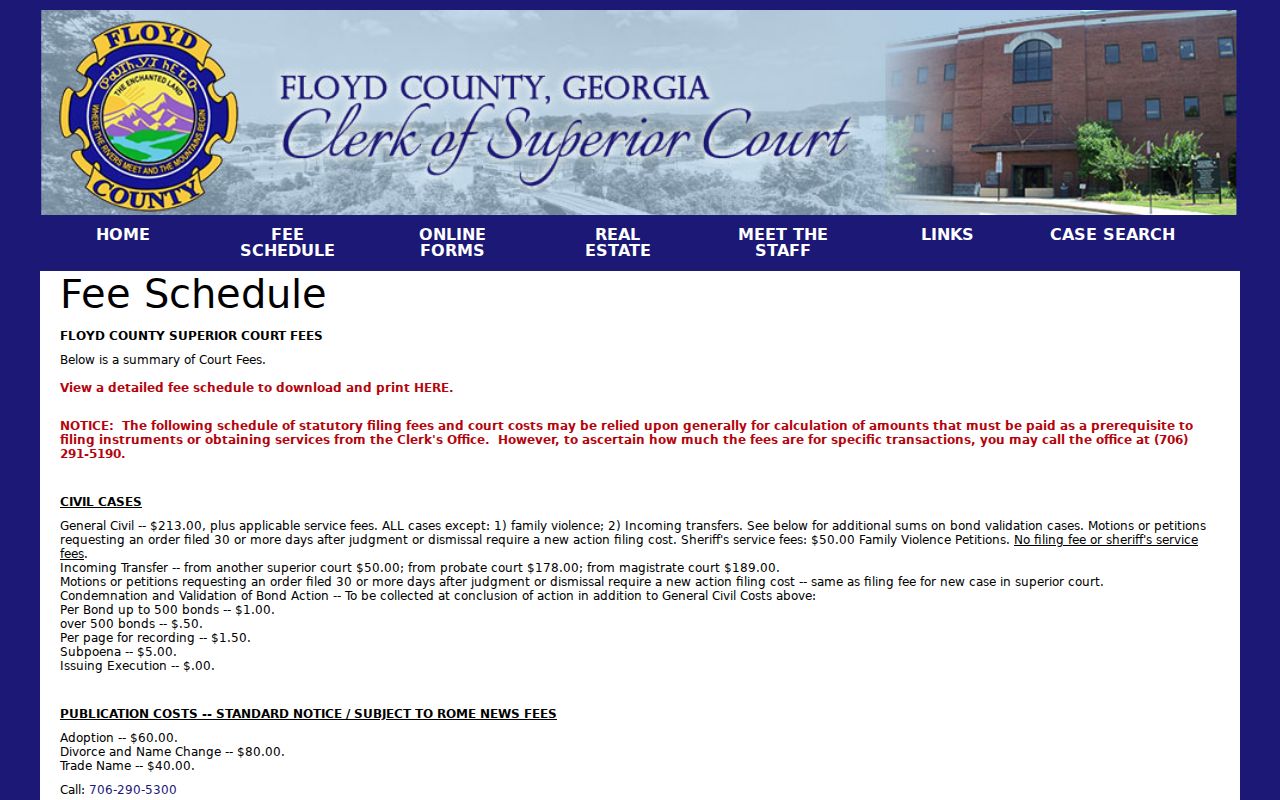
Call the clerk before sending payment. That matters most for a large file, a transcript, an appeal record, an exemplified copy, or electronic delivery.
Write a Precise Floyd Request
A precise request gets faster results from the Floyd clerk. Name the tribunal, plus the division if you know it. Give the case number and the party name as it appears in the case. Add the document title and a date range. Say whether a plain scan works or whether you need clerk certification. Pick your delivery method too: email, mail, or counter pickup.
One routing mistake causes most delays. Never send a Superior file through the county's NextRequest portal. That service handles Floyd County administrative records under the Georgia Open Records Act. A Probate, Magistrate, Rome, or Cave Spring item belongs with that court instead. Unsure of the court? Quote the issuing court or caption exactly rather than guessing.
Note: A portal event only proves what its entry states. When exact language matters, request the filed order or judgment itself.
Floyd Probate and Magistrate Files
The Georgia Probate Records portal splits its content into estates, marriages, traffic, wills, guardianships, hearings, and other modules. None of that belongs to the Superior Clerk's file. Work through the county Probate page and the right module. Then contact Probate when a public form does not expose the document you need.
Treat a Probate result as an index, not a guarantee. It makes no promise. Every will, petition, inventory, guardianship paper, or traffic order may still need a clerk request. Record type and case dates both help. Staff can then tell a court file from a license or other administrative item. Ask whether the paper is public. Ask whether redaction applies and whether certification is available.
Magistrate records stay with Magistrate Court. That court takes civil claims up to its stated jurisdictional limit. It also handles dispossessory and garnishment matters and several criminal-process functions. Its forms and fee page is not a universal copy request. Ask Suite 227 for the exact docket or paper. Confirm the fee before paying anything.
Older or unclear Magistrate matter? Keep the exact case label from the notice or calendar PDF. Floyd's document center uses short file codes with no published key. Do not expand those codes by guess. The clerk can confirm the file unit, calendar, and copy method tied to that label.
Access Rules for Court Records
Georgia Uniform Superior Court Rule 21 starts from openness. Court records are public unless law or court procedure limits access. The rule also sets a process for restricting access and covers protected identifiers. Sealed material, juvenile data, protected domestic information, and case-specific access orders can each narrow what appears online or what a clerk may release.
Key access rules:
Georgia Uniform Superior Court Rule 21 sets the public-access starting point and the process for limits and redaction.
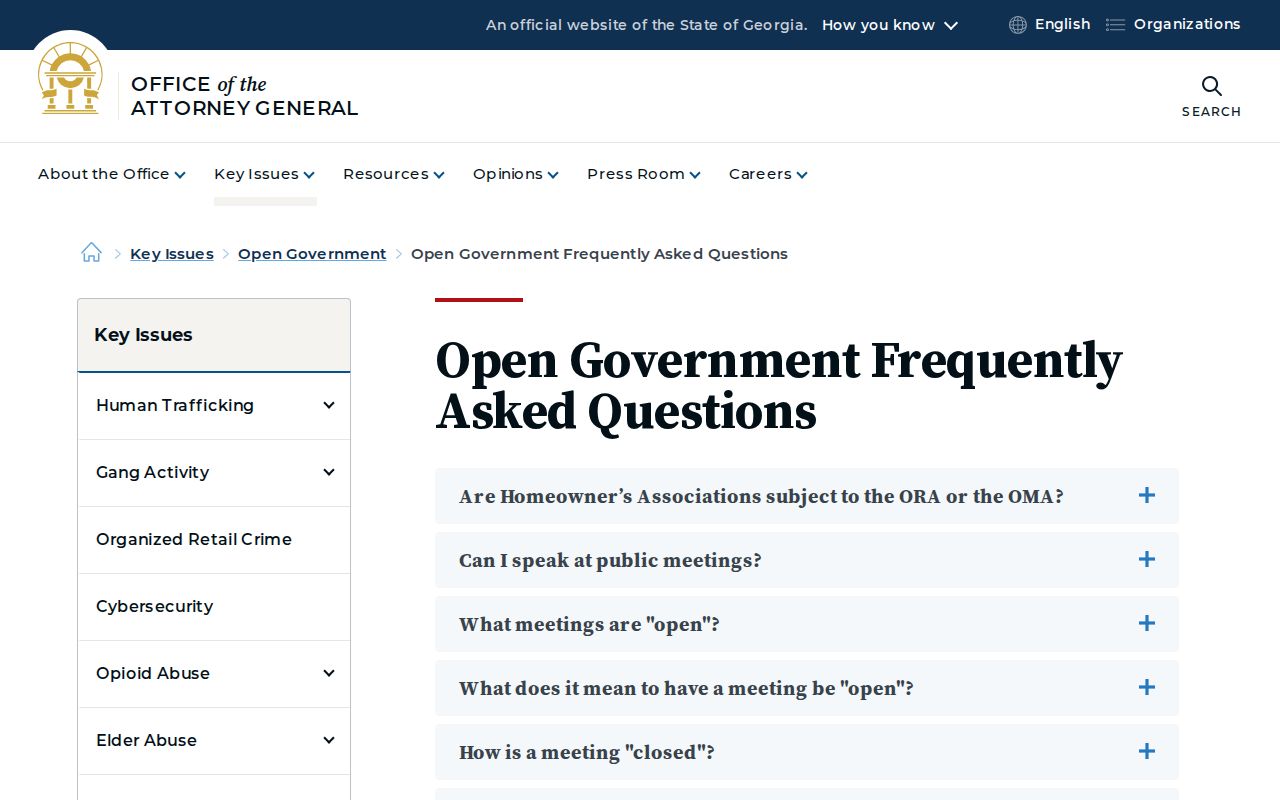
Georgia Open Government FAQ explains requests, reasonable retrieval charges, and redaction under general guidance.
The Georgia Open Records Act route does not turn the county administrative clerk into the custodian of a judicial case file.
The Attorney General's official FAQ illustrates the state's public-record guidance and redaction boundary.
A no-result screen proves very little. It does not show that a Floyd County case never existed, nor that the record is sealed. Check the category, the scope, and the clerk first.